
In this article
Start with the resources
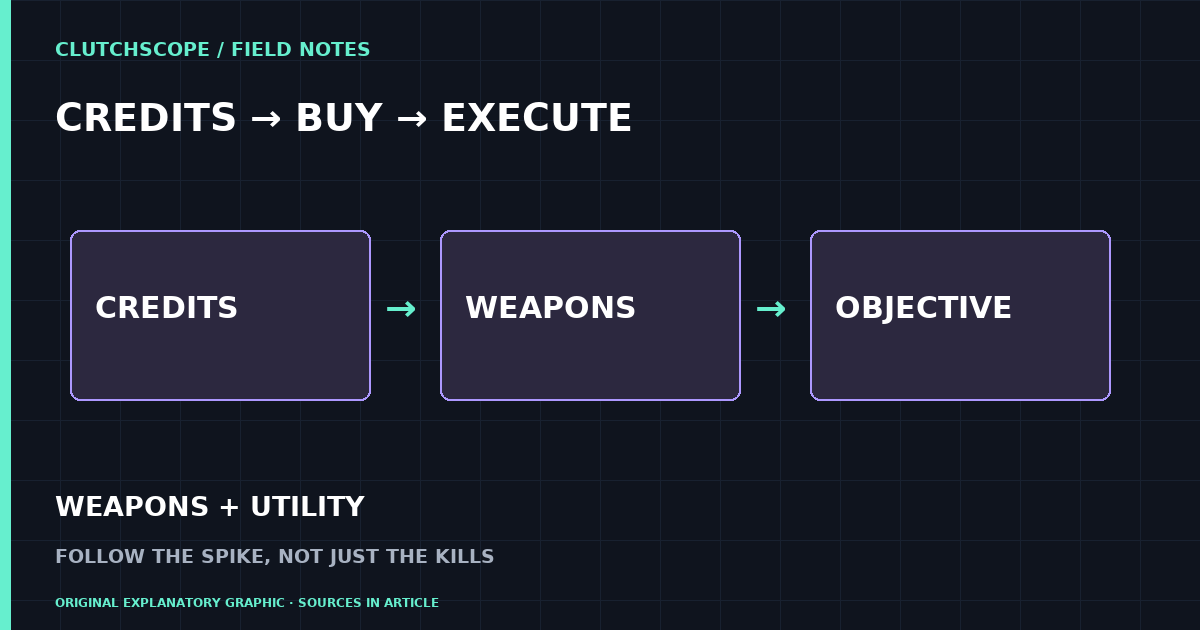
Riot’s beginner guide explains the buy phase: players use credits to purchase weapons and abilities before a round. That makes the equipment screen part of the story. Look at what a team can actually buy before deciding that a lost round was a surprise.
Follow the objective
Attackers try to plant and detonate the Spike; defenders try to prevent that or defuse it. Eliminations make those tasks easier, but a kill count alone does not explain whether a team completed its objective.
Utility creates the opportunity
Riot describes agents as having abilities that work together. A controller can obscure sightlines, for example. When a player finds an opening, ask what made the duel possible: information, blocked vision, timing or a teammate’s pressure. The highlight may show one player while the setup involved several.
A practical three-pass replay
First watch the round normally. On the second pass, focus on purchases and which tools remain available. On the third, follow the objective rather than the player with the most kills. This is a simple editorial method for understanding a broadcast, not a promise that one statistic identifies the winning strategy.
Keep the rules current
The official beginner guide is a useful starting point. Its historical agent and map counts should not be treated as current counts. For a specific competition, read its current rules and map pool rather than assuming every mode uses the same format.